A hotel wedding venue is a venue that also happens to own several hundred beds, a commercial kitchen and a sales team whose job is filling both. Almost everything that makes a hotel wedding different from any other kind of wedding follows from that one fact.
This guide is the map. Each section is short on purpose — where there's real depth, it lives in its own guide and this page links to it rather than retelling it.
The four shapes a "hotel wedding venue" comes in
The phrase covers four quite different products, and the first useful thing you can do is work out which one you're actually shopping for.
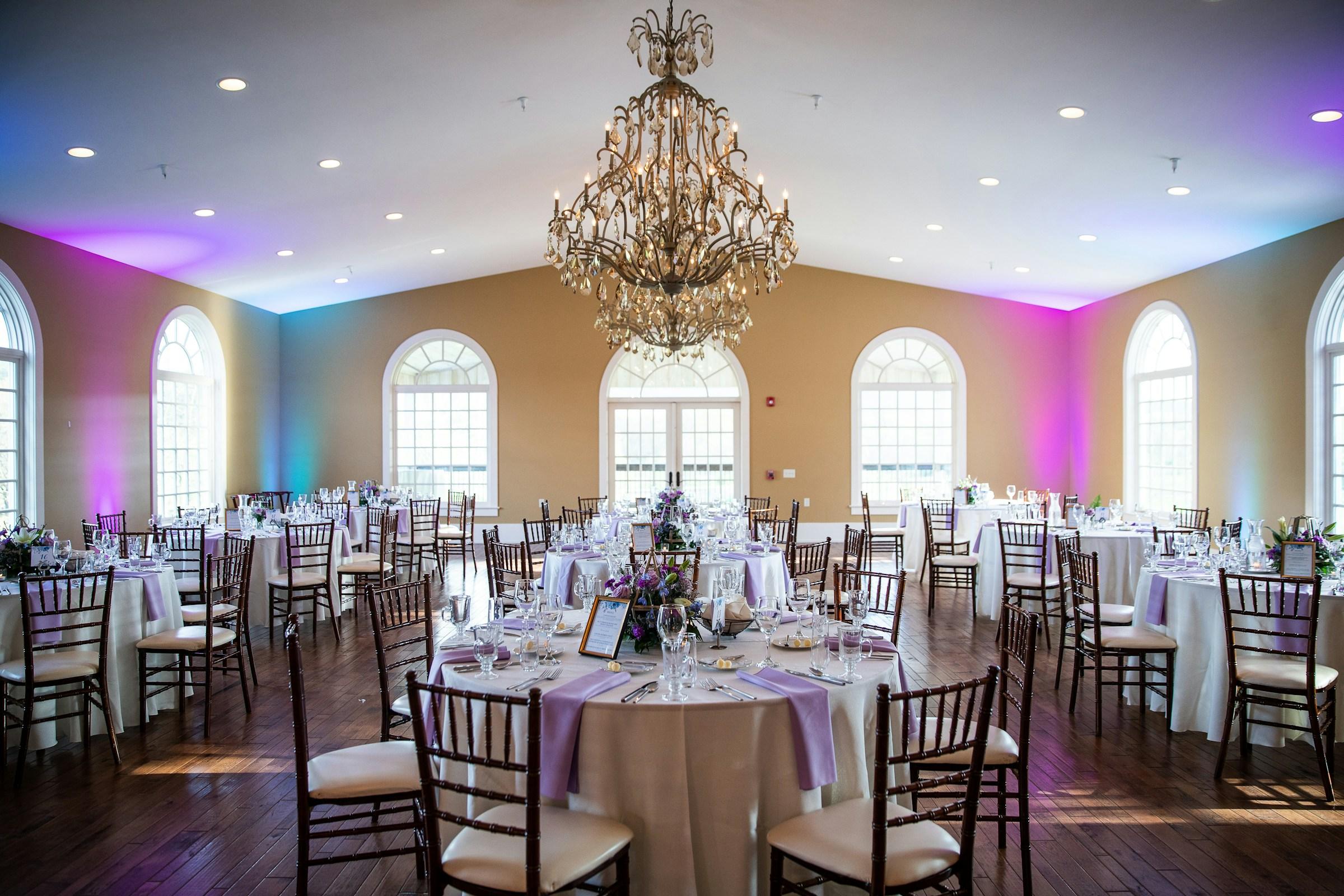
The city ballroom. A full-service hotel with function space, an in-house catering operation and a food-and-beverage minimum attached to the room. Your wedding is one event in a building that is also running a conference on the floor below. This is the default case, and it's the one most of the pricing structure below assumes. Many of these carry a chain flag, which tells you less about the wedding than you'd think: chain hotel weddings covers what the brand does and doesn't control.
The resort. A property where the wedding is part of a multi-day stay, priced on room nights as much as on catering, often with its own on-site coordinator and a weekend-shaped program rather than a five-hour event. It reads like the same category on a search results page and behaves like a different business. Ballroom vs. resort weddings is the one to read if you're weighing those two against each other.
The boutique property. Smaller room count, independent or small-group ownership, function space that tends to be a restaurant, courtyard or library rather than a purpose-built ballroom. The trade is character for capacity.
The whole-property buyout. You take the entire hotel — rooms, public spaces, restaurant — for a night or a weekend. Rarer, priced on a completely different logic, and worth understanding even if you don't end up doing it: see Hotel buyouts for weddings.
The four things a hotel does that a standalone venue can't
These are structural, not marketing claims. They're true of hotels because of what a hotel is.
- Your guests sleep upstairs. No taxi plan, no designated-driver arithmetic, no 40-minute drive back at midnight. This is also why hotels can discount rooms for you at all — see room blocks below.
- The kitchen is already there. Catering is in-house, so there's no separate caterer contract, no kitchen-hire line and no vendor-access negotiation. You pay for it in a food-and-beverage minimum instead.
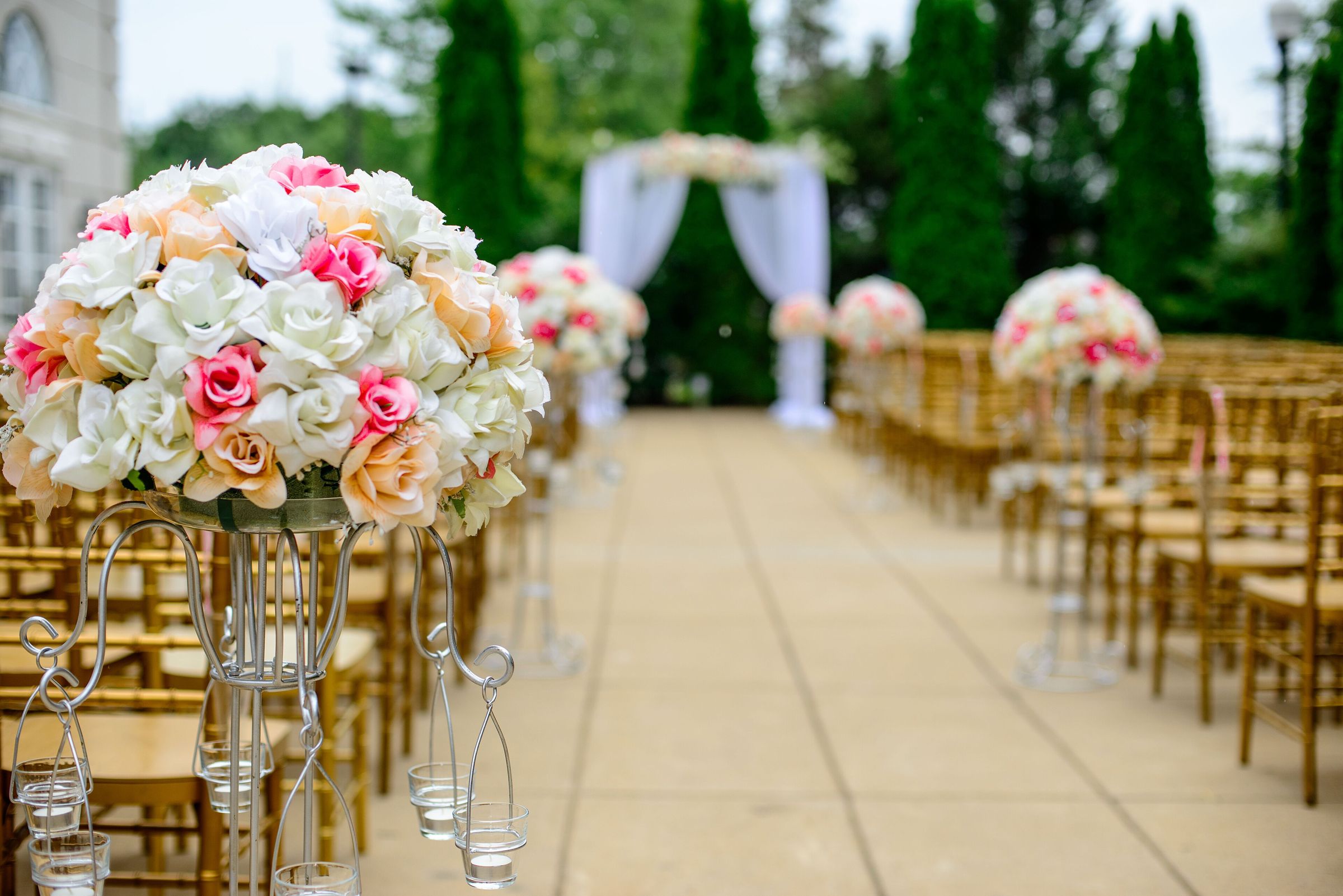
- There's a real indoor backup. A hotel with an outdoor ceremony lawn usually also owns a ballroom fifty meters away. A standalone outdoor venue's rain plan is a tent you rent separately. Indoor vs. outdoor is built entirely around that difference.
- It's one contract and one accountable party. When the ceremony runs late, the venue, the caterer and the bar are the same company, arguing with itself on your behalf rather than with each other at your expense.
The honest version of the comparison — including where a standalone venue is the better answer — is Hotels vs. standalone wedding venues.
Photo: Bhullargraphic, CC BY-SA 4.0, via Wikimedia Commons
What it costs
Two numbers, not one, because the industry's own sources measure two different things and mixing them is how couples under-budget.
Venue rental on its own averages $8,573 nationally, in a typical band of $6,900–$10,300 (Zola's 2026 Wedding Cost Index, updated March 2026) — that is the room, parking and utilities, about 17% of a total budget. But that is an average across every venue type, and Zola's own data puts hotels at about 2.5 times the national baseline, which is nearer $21,000. Hotels sit at the top of that distribution, not the middle of it.
Venue including food and drink is the number most couples actually end up comparing. The Knot's 2026 Real Weddings Study puts the average venue cost at $12,900, and describes the real spread as roughly $8,000 for the venue alone up to about $22,000 once catering, alcohol and rentals are in it.
So: do not take a venue-only figure and add catering to it twice, and do not take an all-in figure and assume catering is still to come. Ask any hotel which of the two its number is. That question alone will separate the quotes you can compare from the ones you can't.
These are market benchmarks, not any hotel's quote.
They are also what a "starting at" figure has to be sanity-checked against before you start believing it.
What that range doesn't tell you is how a quote is assembled, which is the part that actually decides whether two hotels are comparable. What a hotel wedding actually costs takes that apart: fixed costs, per-person costs, minimums, and the five line items that sit outside almost every package.
Why the price usually isn't published
Most hotel wedding pages don't show a number. That's industry-wide rather than evasive: the same ballroom genuinely costs different money on a Saturday in June and a Thursday in February, and a single published price would be wrong for most of the people reading it.
What's worth watching isn't the missing number. It's how fast a real range arrives once you ask. A hotel that answers within a business day is behaving normally; one that takes three weeks is telling you how the wedding will be run, not just how it will be priced.
Rooms are half the deal
If a meaningful share of your guests are traveling in, the room block is not a footnote to the venue decision — it's a second negotiation running alongside it, with its own minimums, its own deadline and, in one common form, its own way of costing you money if attendance comes in low.
Two numbers worth carrying into the first conversation: a fair group rate is 10–20% below the hotel's published best-available rate, and roughly 60–70% of out-of-town guests actually book inside the block. Room blocks covers the mechanics, the sizing arithmetic and the courtesy-versus-contracted distinction that decides whether you carry any liability at all.
Package structure, in one line
Nearly every hotel bundles the same handful of items under different names — room rental, tables and linens, a plated or buffet dinner at a per-person rate, house AV, a room-block discount — and charges separately for corkage, vendor meals, overtime and anything past house-standard decor. Bar service varies: some packages include a set number of open-bar hours, many don't. Hotel wedding packages, explained is the one to read before you compare two proposals that are worded nothing alike.
How to actually shortlist
Search radius is the decision most couples make by accident, by looking at whatever a map showed them first. It's worth making deliberately, because for a hotel wedding the right radius depends on where your guests are coming from rather than where you live. How to find a hotel wedding venue near you is the method.
Read next
- What a hotel wedding actually costs — how a quote is built, and what the benchmark range does and doesn't cover
- Hotel wedding packages, explained — what's bundled, what's extra, how to compare two differently worded quotes
- Hotel wedding room blocks: how they actually work — minimums, discounts, cutoffs, attrition and the sizing math
- Hotels vs. standalone wedding venues — the structural comparison, including where a hotel loses
- How to find a hotel wedding venue near you — setting a radius that matches your guest list
- Ballroom vs. resort weddings — two products wearing one name
- Indoor vs. outdoor: what hotels actually offer — the rain-contingency difference
- Hotel buyouts for weddings — taking the whole property, and what it's really priced on
Every figure on this page is an industry benchmark with its source, not a specific property's pricing, and no claim here describes a named hotel. For a real number, use the property's own estimate tool or contact form.