"Hotel wedding" covers two products that don't have much in common beyond the word "hotel."
One is a ballroom in a downtown property, booked for an evening, where your guests mostly fly in for one night. The other is an all-inclusive resort, booked for several days, where the wedding is really a group vacation with a ceremony in the middle of it. Both get sold under the same search term. They're priced differently, staffed differently, and they ask you to make different decisions.
Knowing which one you're actually shopping for — before you start comparing quotes — saves you from comparing two things that were never comparable.
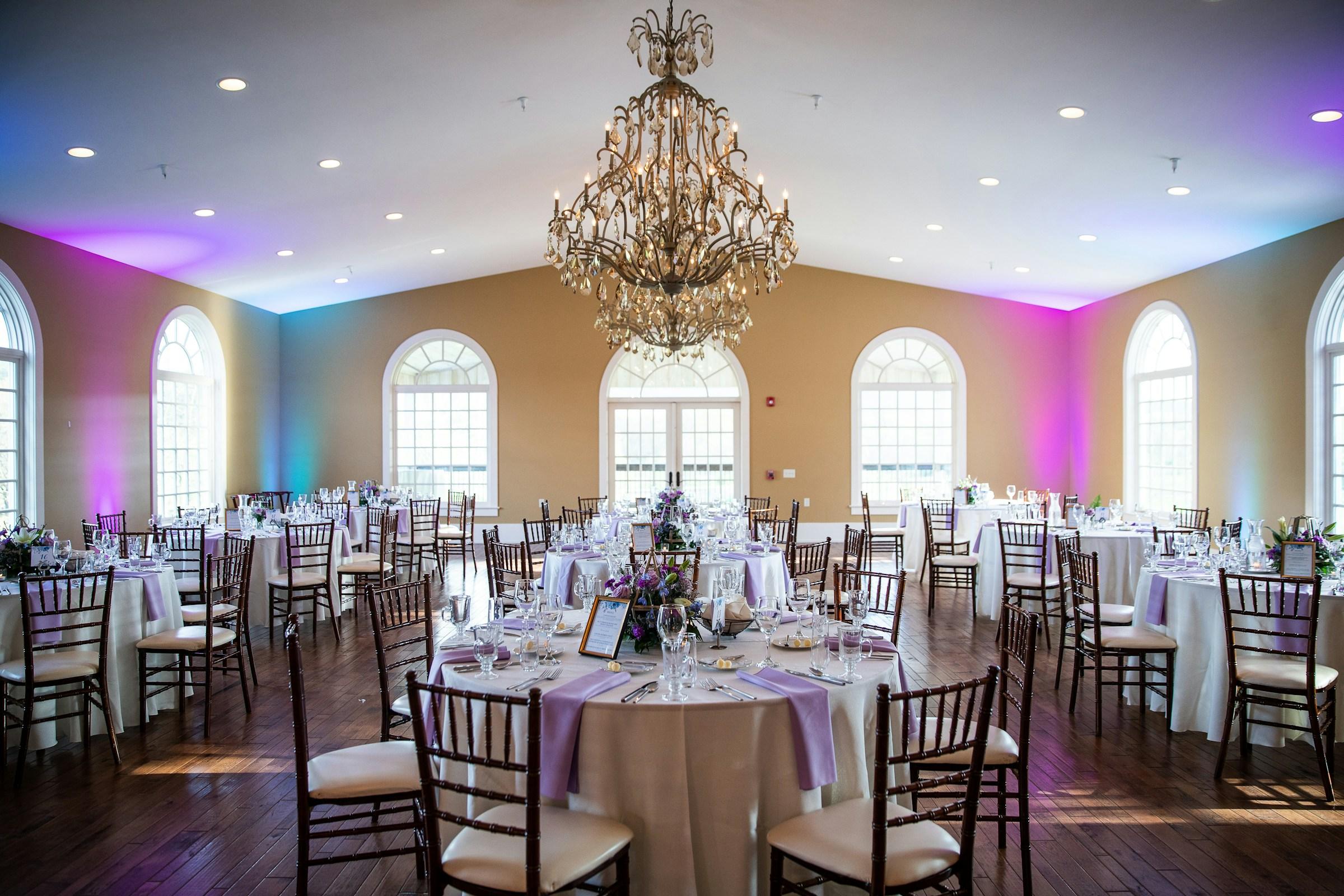
The city ballroom
This is the classic downtown or urban hotel wedding: a single evening, a defined room, a guest list that mostly lives within a few hours' drive and goes home the same night or the next morning.
How it's priced. Through a food-and-beverage minimum on top of the room rental — a spending floor on catering and bar, not a flat fee. What that minimum actually is varies too widely to quote, so we don't publish a range. It moves with guest count, day of week, season and market. Ask for the number in writing for your date, because it is the single figure most likely to decide whether a venue is affordable, and it is rarely on the website. You're committing to hit that number in food and drink regardless of exact headcount, which is why guest count matters so much to the final price.
What you're actually buying. A room, for one event, plus the hotel's catering and service team for that one night. Out-of-town guests get a room block at a discounted rate, but the wedding itself doesn't require anyone to stay overnight.
What it's good for. Weddings where most guests are local, where you want a specific room's architecture (a real ballroom, a rooftop, a specific view), or where a multi-day destination event isn't the goal.
The resort wedding
This is a different structure entirely: guests travel to the property and stay for several days, with the wedding as one event inside a longer group trip. All-inclusive resorts are the clearest version of this, but the same logic applies to any resort wedding where lodging is central to the plan.
How it's priced. Very differently. Instead of a food-and-beverage minimum, resorts typically monetize through room nights — couples and their guests booking a block of rooms across several days, often through a destination-wedding specialist who earns a commission on that room-block value — commonly quoted at 5–15% depending on property and contract, and in North America usually on the room rate only, not taxes or resort fees (Hilton, for one, also allows a tax-inclusive basis internationally). That commission is usually built into the resort's group rate, not an extra cost you pay on top — which is exactly why using a specialist is often free to you as the couple.
What you're actually buying. Days, not hours. A resort wedding usually includes welcome events, the ceremony, the reception, and often a farewell brunch — spread across the stay, with your guests living on-property the whole time.
What it's good for. Weddings where a shared trip is part of the point, where a big share of guests are traveling from out of town anyway, or where an all-inclusive structure (meals and drinks bundled into the room rate) is worth more to your guests than it costs you.

The comparison that actually matters
Don't compare a ballroom's F&B minimum to a resort's room rate — they're not the same kind of number, and doing the math that way makes one option look artificially cheaper than it is.
Instead, ask the same three questions of both:
- What's the true guest cost? For a ballroom, that's your F&B minimum divided by expected headcount, plus anything guests pay themselves (their own hotel room, if they need one). For a resort, it's the group room rate across the stay, which your guests are usually paying directly — so "your" wedding cost and "their" travel cost are more intertwined than in a ballroom wedding.
- Who's actually traveling? If most of your guest list is local, a multi-day resort structure adds cost and logistics without adding much benefit. If most are traveling regardless, a resort wedding turns unavoidable travel into a shared experience instead of a one-night obligation.
- Is a specialist involved, and does that change the price? A destination-wedding specialist's commission is usually resort-funded, not couple-funded — meaning working with one on a resort wedding often costs you nothing extra and gets you someone who negotiates the group rate professionally. A city ballroom typically doesn't have this layer; you're negotiating directly with the hotel's own catering sales team.
The honest tradeoff
A ballroom wedding is simpler to plan and evaluate: one room, one night, one F&B number to negotiate. A resort wedding is a bigger commitment to organize — you're effectively planning a multi-day group trip — but it can turn your wedding budget into something your guests directly benefit from, since a meaningful share of what you'd spend on flowers and decor at a ballroom instead becomes days of paid-for meals, drinks and lodging for the people you invited.
Neither is the "real" hotel wedding. They're different products that happen to share a search term — and the venues in each category are worth comparing within their own type, not against each other.
Read next
- Hotel wedding venues: the complete guide — the pillar guide: the whole category, and where this piece fits in it
- Hotel wedding packages, explained — what's actually inside a ballroom package once you've decided that's the structure you want
- Hotel wedding room blocks: how they actually work — the room-night side of a resort wedding runs on the same block mechanics
- Indoor vs. outdoor: what hotels actually offer — relevant either way, but especially if a resort's outdoor spaces are part of the appeal
Figures cited here (F&B minimums, commission structure) describe how these two hotel-wedding types are typically priced across the industry, not any specific property's rates. Get an actual quote from any venue you're considering — these ranges are for sanity-checking a quote, not replacing one.