Two numbers, not one, because the industry's own sources measure two different things and mixing them is how couples under-budget.
Venue rental on its own averages $8,573 nationally, in a typical band of $6,900–$10,300 (Zola's 2026 Wedding Cost Index, updated March 2026) — that is the room, parking and utilities, about 17% of a total budget. But that is an average across every venue type, and Zola's own data puts hotels at about 2.5 times the national baseline, which is nearer $21,000. Hotels sit at the top of that distribution, not the middle of it.
Venue including food and drink is the number most couples actually end up comparing. The Knot's 2026 Real Weddings Study puts the average venue cost at $12,900, and describes the real spread as roughly $8,000 for the venue alone up to about $22,000 once catering, alcohol and rentals are in it.
So: do not take a venue-only figure and add catering to it twice, and do not take an all-in figure and assume catering is still to come. Ask any hotel which of the two its number is. That question alone will separate the quotes you can compare from the ones you can't.
These are market benchmarks, not any hotel's quote.
It's also, on its own, close to useless — because two hotels can quote the same headline number for offers that differ by thousands once you've had the wedding. What's worth knowing is how the number gets built.
A hotel quote has three layers, not one
Almost every hotel wedding quote decomposes into the same three things. Ask which is which, and a confusing proposal becomes comparable.
Layer one: what you pay for the space. Room rental, sometimes called a site fee or facility fee. Fixed. It doesn't move with your guest count, which means it gets cheaper per head as the wedding gets bigger and brutally expensive per head as it gets smaller.
Layer two: what you pay per person. Food, and usually a service charge and tax stacked on top of it. This scales linearly, and it's where most of the money is. A per-person figure quoted without confirming whether service and tax are inside it is the single most common source of a nasty second conversation.
Layer three: the minimum. A food-and-beverage minimum is a floor you commit to spend, not a price for anything. If your catering total lands under it, you pay the difference anyway — sometimes as a "room rental" that quietly reappears. Minimums are why a small wedding at a big hotel often costs the same as a medium one.
Ask for all three separately. A hotel that won't separate them is not necessarily hiding anything, but you can't compare it to anything until it does.
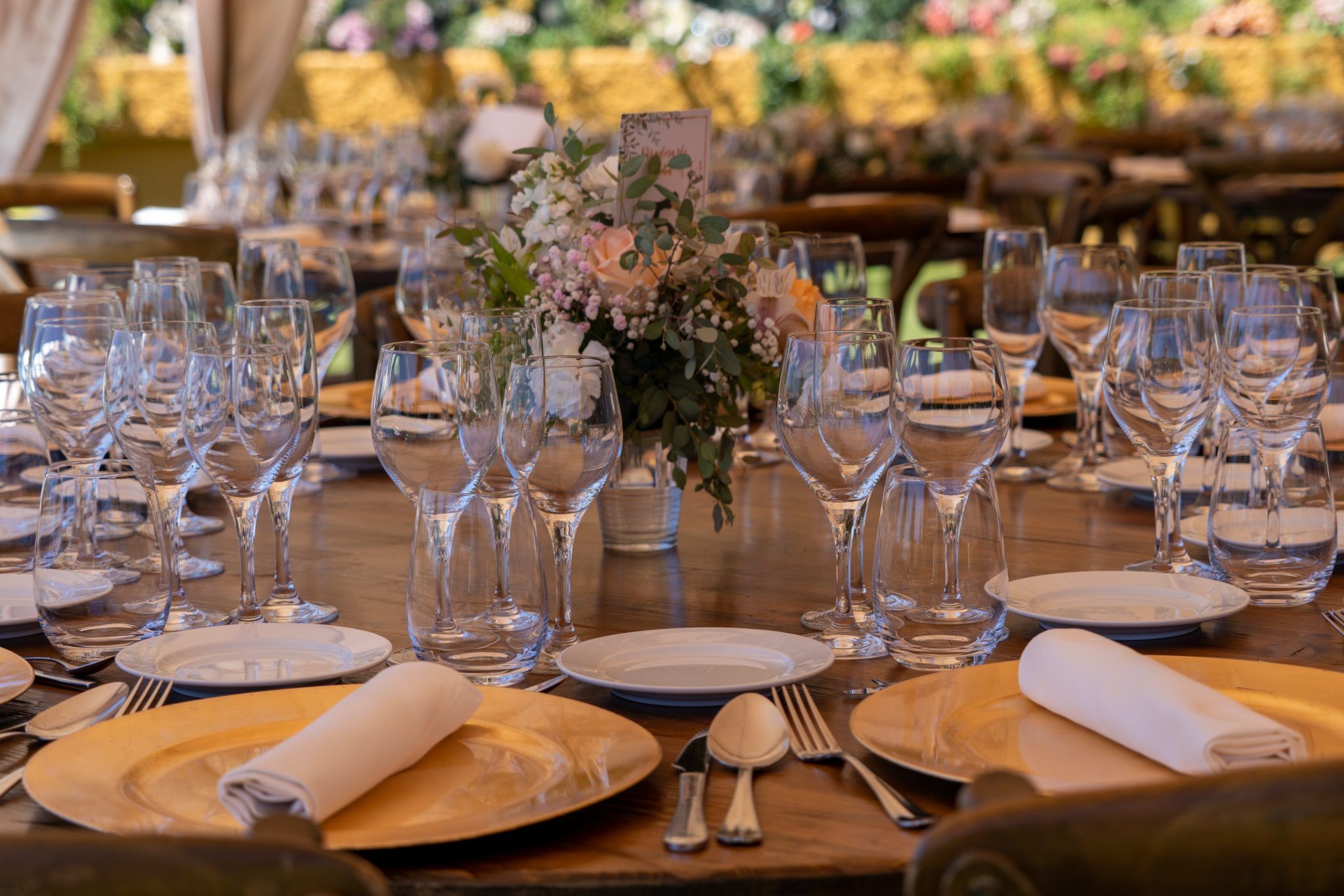
Why the same headline price isn't the same offer
The most useful arithmetic in this whole process takes ten seconds: divide by guest count before comparing anything.
A $9,000 package for 80 guests is $112 a head. A $9,000 package for 200 guests is $45 a head. Same headline, materially different offers.
Then layer the extras on top. Hotel wedding packages, explained lists the five that sit outside nearly every package — bar service, corkage and cake-cutting, vendor meals, overtime, and decor past house standard. A hotel that's $8 a head more expensive but bundles the bar can come out cheaper than the one that didn't mention it.
The rooms are part of the cost, in both directions
For a wedding where most guests travel in, the room block changes the total cost of the weekend even though it never appears on the catering quote.
In your guests' favor: a fair group rate sits 10–20% below the hotel's published best-available rate, and comp rooms — commonly one free per 20–25 booked — usually land on your own room.
Against you, in one specific case: a contracted block means you've guaranteed room-nights, and an attrition clause can bill you for the shortfall if guests don't book. A courtesy block carries no such liability. That distinction is worth more money than most line items on the catering quote, and it's covered properly in Hotel wedding room blocks: how they actually work.
Why so few prices are published at all
Most hotels quote only after a call. This is normal for the category rather than a warning sign, and the reason is defensible: the same ballroom genuinely costs different money in June and February, and a single published price would mislead most of the people reading it.

The questions that get you a real number fastest
Ask these in the first email and you'll usually skip two rounds:
- What's the food-and-beverage minimum for our date, and what's the room rental if we hit it?
- Is the per-person price inclusive of service charge and tax, or before them?
- What's the bar priced at — per person, per drink, or on consumption?
- What's the contracted end time, and what does overtime cost per hour?
- Are vendor meals charged at the full per-person rate or a reduced one?
Five answers, and you have something you can actually put next to another hotel's proposal.
Read next
- Hotel wedding venues: the complete guide — the whole category in one place, if you're earlier in the process
- Hotel wedding packages, explained — what's bundled and what isn't, item by item
- Hotel wedding room blocks: how they actually work — the second negotiation, and the one that carries liability
- Affordable hotel weddings — which levers actually bring the number down
The ranges here describe the hotel wedding market, not any individual property, and nothing on this page is a quote. For a real number, use a venue's own estimate tool or contact form.