Hotel wedding packages, explained sets out the two benchmarks worth starting from: venue rental averaging $8,573 nationally, and hotels running about 2.5 times that on Zola's own data. Catering is separate from the rental figure and already inside the all-in ones — which is exactly the distinction that decides whether a budget works. This guide isn't about finding a hotel that quotes below that range — for a full-service property, that's rare and usually means the package is missing something. It's about which real, controllable choices move a couple's number down from wherever their shortlist lands, and by roughly how much.
Worth saying plainly before the levers below: if you expect "affordable" to mean "cheap," a hotel will disappoint you. A hotel wedding is a full-service venue with staff, insurance, kitchen infrastructure and a sales team behind it. The levers below make it less expensive than the alternative on the same night, not inexpensive in an absolute sense.
What "affordable" means in this category
It means relative, not absolute. A hotel wedding is being compared against other hotel weddings, or against the same hotel's own peak-Saturday number — not against a backyard or a public park, which have a different cost structure entirely (and different liability, permitting and weather exposure that a hotel's price is partly paying for). If the goal is the lowest possible number in dollar terms, a hotel is very likely not the venue category to start from. If the goal is a full-service hotel wedding at the lowest number that category allows, the rest of this guide is for that couple.
The levers that actually move the price
Date: day of week and season
This is the single biggest lever, and it's also the one couples give up the most by defaulting to a Saturday. Saturday evening is the highest-demand slot at almost every hotel, and pricing follows demand. Friday evenings and Sunday afternoons are routinely priced lower at the same property for the same room — Zola's venue-cost guide puts Friday and Sunday 10–20% below Saturday, and weekdays 30–40% below, though the exact number is set by each hotel's own catering sales team, not a fixed formula. Off-peak months (whatever counts as low season for that property's market — often winter in warm-weather destinations, or the shoulder months around a resort's peak) compound the same effect. Ask directly: "what does this room rent for on a Friday or Sunday in [named off-peak month]?" — not "do you have a discount," which invites a vaguer answer.
Guest count and the F&B minimum
Most hotel wedding contracts aren't priced on the room — they're priced against a food-and-beverage minimum: a dollar floor the catering total has to clear regardless of headcount. A smaller guest list doesn't just mean fewer plates; it can mean the minimum itself becomes reachable with a simpler menu instead of an upsell to hit the floor. It cuts the other way too — a very small guest list on a night with a high F&B minimum can end up paying a higher per-guest rate than a mid-sized wedding would, because the same floor is being split fewer ways. Ask for the F&B minimum by day of week before asking about menus; it tells you more about the real cost floor than any package name does.
Ceremony-only instead of the full package
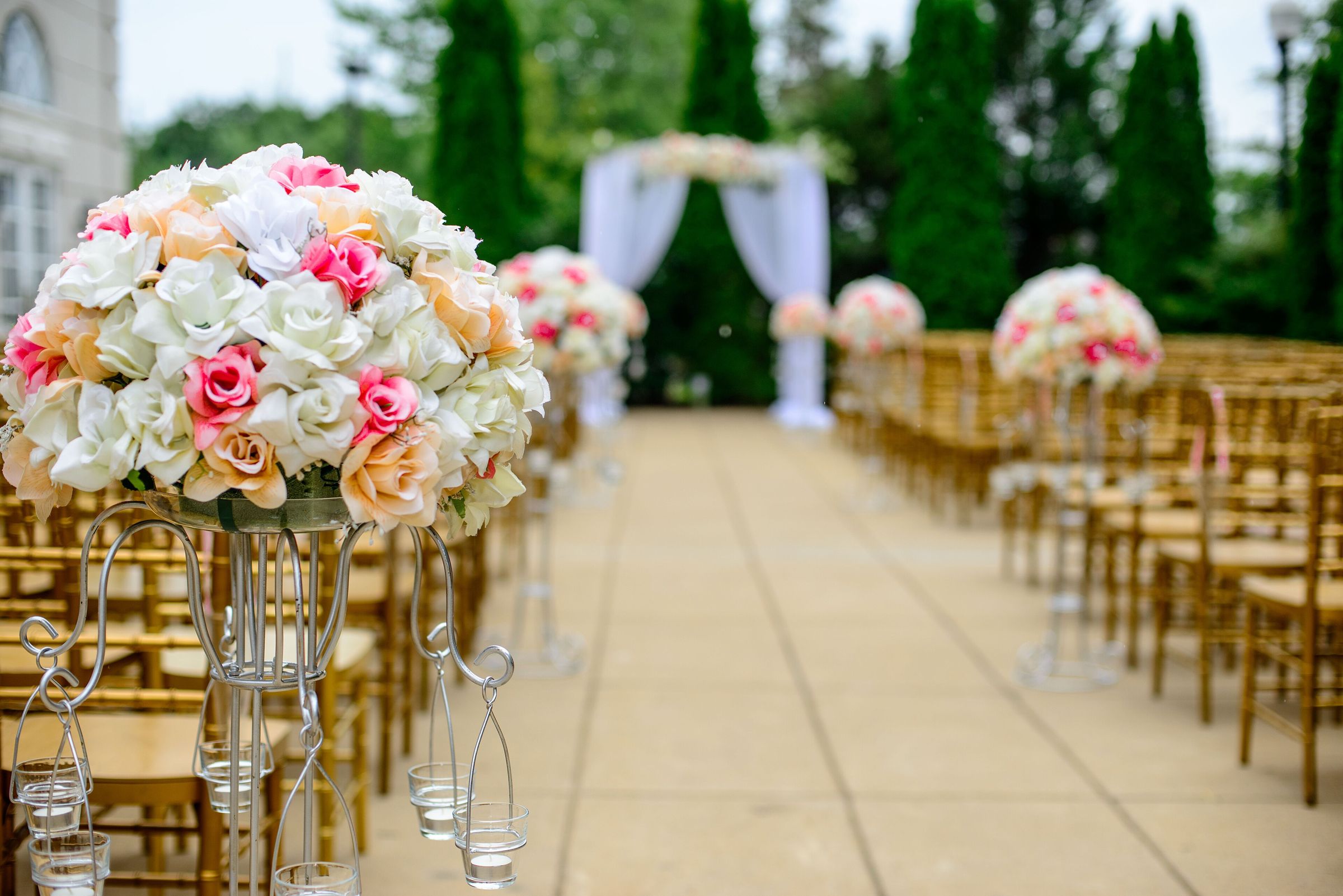
Hotel wedding packages, explained describes ceremony-only packages as a stripped-down version of the full bundle — space, chairs, a basic sound system — with reception costs handled separately. That's the tradeoff in plain terms: it removes the reception's F&B minimum from the hotel's invoice entirely, which is the largest single cost driver in a full package. It only lowers the wedding's total cost if the reception is genuinely smaller or handled elsewhere for less — not if it just moves the same dinner to a different vendor at a similar price.
Brunch or lunch reception instead of dinner
Meal period changes what's on the menu, and menu is most of a catering invoice. A plated or buffet dinner reception is priced against dinner-tier proteins and a full evening bar; a brunch or lunch reception is priced against breakfast-and-lunch ingredients and, if there's a bar at all, a shorter and lighter one (mimosas and a coffee station instead of a full open bar). General wedding-catering cost guides describe brunch or lunch per-person food costs running well below a comparable dinner menu, though the exact gap is set by each hotel's kitchen and menu tier, not a fixed percentage worth quoting as a promise. A brunch reception also shortens the room's contracted hours, which matters directly for the next lever.
A shorter contracted window
Hotel rooms are rented by the hour as much as by the day. A five-hour reception costs less than an eight-hour one at the same per-hour rate, and — as covered in Hotel wedding packages, explained — overtime past the contracted end time is billed steeply. Booking a shorter window on purpose, rather than defaulting to "standard" hours and risking overtime, is a lever inside the couple's control from the first conversation with sales.

What this won't do
None of this turns a hotel wedding into a low-budget wedding. It moves a couple from the expensive end of the hotel range toward the affordable end of it, and it can meaningfully lower the catering total layered on top — but the floor under a full-service hotel, with its staff, kitchen and insurance overhead, doesn't disappear. Anyone whose target number is genuinely below what a hotel can offer, even off-peak, at brunch, with a short guest list — is better served comparing against a different venue category, not pushing harder on the same hotel's sales team.
Read next
- Boutique hotel weddings — a smaller, independently run property is a different cost structure than a full-service flagship, not just a smaller version of one
- Small and intimate hotel weddings — how guest count below a hotel's usual minimum changes the negotiation, beyond the F&B-minimum math above
- Luxury vs. five-star hotel weddings — the other end of the same spectrum, and what actually separates the price tiers